
US English UK English Polish Italian Hungarian Greek Spanish German Australian English


in the news

understanding
your tests

inside the lab

about this site

site map

send us your
comments


home
Hypercoagulable Disorders
Laboratory Tests

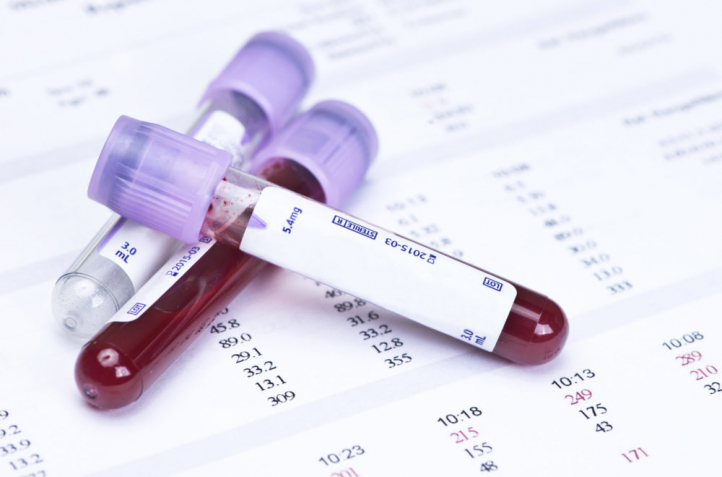
Although it may be fairly simple to identify that a patient has a clot, identification of the cause may take more time and effort. This is because several of the diagnostic tests that need to be done are affected by an existing or recent blood clot and by any anticoagulant therapy that is given. Often the doctor may have to order a few tests and treat the person’s existing blood clots first. Several weeks or months later, when he is able to take the person off of anticoagulant therapy, the doctor can order other tests to finish his evaluation of the cause of the clotting. Follow-up testing is important in helping to determine a patient’s risk of developing recurrent blood clots.

Initial testing may include: a PT,  PTT, CBC, Activated Protein C Resistance (APCR), Factor V Leiden mutation assay (when APCR is abnormal), homocysteine, anticardiolipin antibodies, and a prothrombin 20210 mutation test.  If the PTT testing is prolonged, lupus anticoagulant testing may be done later, along with Protein C, Protein S, and Antithrombin (III). 

In general, testing may include:

Treatments

Test Measures Ordered When/To Abnormal Results May Indicate
Anticardiolipin antibodies Presence of antibody Evaluate recurrent blood clots and/or miscarriages Antiphospholipid Syndrome
Antithrombin (III) Activity Activity of Antithrombin Evaluate recurrent blood clots Low activity may increase thrombotic risk
Antithrombin (III) Antigen Quantity of antithrombin Activity is consistently low Decreased production or increased use of factor, may increase thrombotic risk
APCR (Activated Protein C Resistance) Resistance to degradation of activated factor V by APC Evaluate recurrent blood clots Need to confirm by checking for Factor V Leiden mutation
D-dimer Level of a specific type of crosslinked fibrin degradation product Evaluate blood clot formation during bleeding and clotting episodes If elevated, indicates recent clotting activity. May be due to acute or chronic condition, such as a thromboembolism or DIC (disseminated intravascular coagulation)
Dilute Russell Viper Venom Test (dRVVT) Time to clot test, Evaluates the common pathway of coagulation. Dilute refers to lipid concentration. Evaluate recurrent blood clots, when PTT is prolonged, looking for a lupus anticoagulant. When prolonged, suggests lupus anticoagulant may be present, increased risk of thrombosis.
Factor V Leiden mutation Genetic mutation that results in formation of an activated Factor V that resists degradation by APC Recurrent blood clots Increased risk of thrombosis
FDP (Fibrin Degradation Products) Reflection of clotting and fibrinolytic (clot breakdown) activity Evaluate bleeding and clotting If increased, indicates recent blood clot formation and breakdown
Fibrinogen Amount of fibrinogen in the circulation. Evaluate bleeding and clotting If low, may indicate decreased production or increased use, may be elevated with inflammation, it is an acute phase reactant
Homocysteine Level in blood Recurrent blood clots If elevated, increased cardiac risk and risk of thrombosis
Lupus Anticoagulant (LA) Panel of tests are used to check for Lupus antibody Recurrent blood clots and/or miscarriages, prolonged PTT When PTT or LA sensitive PTT and dRVVT are prolonged it suggests LA, usually confirmed with additional testing; if present, increased risk of thrombosis
LA-sensitive PTT (PTT-LA) Time to clot test When Lupus anticoagulant (LA) suspected If prolonged and ‘corrects’ to normal when phospholipids added, may be due to LA
Methylenetetrahydrofolate Reductase (MTHFR) Genetic mutation Homocysteine level is elevated with no clear acquired etiology. Increased risk for developing elevated homocysteine levels.
Platelet Neutralization Procedure (PNP) Timed test using either the PTT or the dRVVT, using platelets as a source of phospholipids Evaluate prolonged PTT and recurrent blood clots If test corrects to normal with the addition of platelets, may indicate presence of a lupus anticoagulant
Protein C Activity Function of Protein C Recurrent blood clots Protein C helps slow down the coagulation cascade by degrading activated Factors V and VIII. If activity is low, there is an increased risk of thrombosis
Protein C Antigen Quantity of Protein C When Protein C activity is low If decreased, may be due to inherited or acquired condition. Increased risk of thrombosis
Protein S Activity Function of Protein S Recurrent blood clots Protein S is a cofactor, helps Protein C
Protein S Antigen (free and total) Quantity of total and free Protein S When Protein S activity low Only free Protein S is available to assist Protein C; total protein S includes free protein S and protein S bound to C4b-binding protein.
Prothrombin 20210 mutation Genetic mutation Recurrent blood clots Increased risk of thrombosis
PT Time to clot As part of an initial workup for bleeding or clotting, monitor anticoagulant therapy Prolonged PT suggests need for additional tests
PTT (Partial Thromboplastin Time) Time to clot test, Evaluates the intrinsic and common pathways of coagulation cascade Screens for lupus anticoagulant, monitor anticoagulant therapy Prolonged PTT suggests need for further tests. May indicate nonspecific inhibitor (such as lupus anticoagulant)


Related Pages
On This Site

Elsewhere On The Web

This article last reviewed on May 23, 2007 .
 
In the NewsUnderstanding Your TestsInside the Lab
About the SiteSite MapSend Us Your CommentsHome


We comply with the HONcode standard for trustworthy health
information:
verify here.


©2001-2008 American Association for Clinical Chemistry
Email concerns to

Terms of UsePrivacy