
Ethical guidelines for our site English Polish, in development Italian, in development Hungarian, in development German Spanish US English Australian English, in Development


in the news

understanding
your tests

inside the lab

about this site

site map

send us your
comments


home


Urinalysis

Also known as: Urine test
Formally known as: Urinalysis
Related tests: Urine culture, Urine protein

The Microscopic Examination

Part of the urinalysis is the examination of some urine with a microscope. Cells, crystals, and other substances are counted and reported either as the number observed “per low power field” (LPF) or “per high power field” (HPF). In addition, some entities are estimated as “few,” “moderate,” or “many,” such as epitheial cells, bacteria, and crystals.

Red Blood Cells (RBCs)
Normally, a few RBCs are present in urine sediment. Inflammation, injury, or disease in the kidneys or elsewhere in the urinary tract (for example, in the bladder or urethra) can cause RBCs to leak out of the blood vessels into the urine. Distinguishing these RBCs from those due to hemorrhoids or menstruation is impossible.

White Blood Cells (WBCs)
The number of WBCs in urine sediment is normally low. When the number is high, it indicates an infection or inflammation somewhere in the urinary tract. Women especially must take care during specimen collection so that vaginal secretions (that can be high in WBCs) don’t contaminate the urine.

Epithelial Cells
Normally in men and women, a few epithelial cells from the bladder (transitional epithelial cells) or from the external urethra (squamous epithelial cells) can be found in the urine sediment. Cells from the kidney (kidney cells) are less common. In urinary tract conditions such as infections, inflammation, and malignancies, more epithelial cells are present. The kind of cells help the health care provider pinpoint where the condition is located. For example, a bladder infection will leave large amounts of transitional epithelial cells in urine sediment. Epithelial cells are usually reported as “few,” “moderate,” or “many” present per low power field (LPF).

Microorganisms (bacteria, trichomonads, yeast)
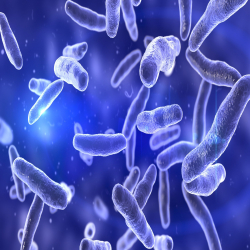
In health, the urinary tract is sterile: you can’t find any microorganisms. Microorganisms are usually reported as “few,” “moderate,” or “many” present per high power field (HPF). There should be “none” present in the urine. However, particularly in women, bacteria from surrounding skin can enter the urinary tract at the urethra and move up to the bladder, causing a urinary tract infection (UTI). If the infection is not treated, it can eventually move up into the kidneys and cause pyelonephritis. Special care must be taken during specimen collection, particularly in women, to prevent bacteria that normally live on the skin or in vaginal secretions from contaminating the urine.

In women (and rarely in men), yeast can also be present in urine. They are most often present in women who have a vaginal yeast infection, because the urine has been contaminated with vaginal secretions during collection.

Trichomonads
Trichomonads are parasites that may be found in the urine of women or men (rarely). As with yeast, the trichomonads are actually infecting the vaginal canal and their presence in urine is due to contamination during urine collection.

Casts
Casts, which look like “hot dogs,” are formed in the kidney’s tubules. The kidney cells secrete a protein (like egg white) that can gel in the tubes, taking the shape of the tube it was formed in. This type of cast is called a “hyaline” cast.

When a disease process is occurring in the kidney, other things such as RBCs or WBCs can become trapped in the gel as the cast is being formed. When this happens, the cast is specifically identified as a red blood cell cast or white blood cell cast, for example. Different types of casts are associated with different kidney diseases.

Normally, healthy people have a few (0–5) hyaline casts per low power field (LPF). After strenuous exercise, however, more hyaline casts may occur. Cellular casts, such as RBC and WBC casts, indicate a kidney disorder.

Crystals
Urine contains many solutes (chemicals dissolved in the urine water) that your body needs to eliminate. These solutes can form crystals if:

  1. the urine pH;
  2. the solute concentration; and
  3. the urine temperature are “just right.”

Crystals are identified by their shape, color, and urine pH. Crystals are considered “normal” if they are from solutes that should be in urine. If they are from solutes that are not supposed to be in urine (such as cystine, an amino acid), they are considered “abnormal.” Abnormal crystals simply inform your doctor of an abnormal metabolic process.

Medications, drugs, and x-ray dye can also crystallize in urine. Therefore, the laboratorian must be familiar with and trained in the identification of urine crystals.

When crystals form as urine is being made in the kidney, they may group together to form kidney “stones” or calculi. These stones can become lodged in the kidney itself or in the ureters (tubes that pass the urine from kidney to the bladder) causing extreme pain.


This article last reviewed on .


In the NewsUnderstanding Your TestsInside the Lab
About the SiteSite MapSend Us Your CommentsHome


We subscribe to the HONcode principles of the HON Foundation. Click to verify.

©2001-2007 American Association for Clinical Chemistry
Email technical concerns to

Terms of UsePrivacy