
US English UK English Polish Italian Hungarian Greek Spanish German Australian English


in the news

understanding
your tests

inside the lab

about this site

site map

send us your
comments


home


Urinalysis

Also known as: Urine test
Formally known as: Urinalysis
Related tests: Urine culture, Urine protein

The Chemical Examination

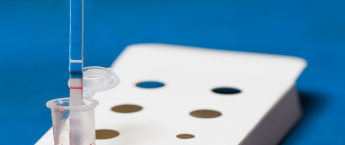
To perform the chemical examination, most clinical laboratories use commercially prepared test strips. These are narrow plastic strips that hold small squares of paper called test pads, arranged in a row. The test pads have chemicals impregnated into them. When a strip is briefly, but completely, dipped into urine, the test pads absorb the urine and a chemical reaction changes the color of the pad.

The laboratorian compares the color change for each reaction pad to a color chart (provided with the test strips) to determine the result for each test. Each reaction pad must be evaluated at the appropriate time. If too little time or too much time has passed since the reaction, the laboratorian may get incorrect results. To reduce these timing problems—and to eliminate variations in color interpretation—automated instruments are frequently used to “read” the reaction color on each test pad.

The most frequently performed chemical tests using reagent test strips are

(Some reagent test strips also have a test pad for ascorbic acid [vitamin C].)

Specific Gravity (SG)
The first test, specific gravity, is actually a physical characteristic of the urine, a measure of urine concentration that can be determined using a chemical test.

There are no “abnormal” specific gravity values. This test simply indicates how concentrated the urine is. Specific gravity measurements are actually a comparison of the amount of solutes dissolved in urine water as compared to pure water. If there were no solutes present, the SG of urine would be 1.000––the same as pure water. A urine SG of 1.000 is physically impossible; if a person drinks huge amounts of water or gets an intravenous (IV) infusion of large volumes of fluid, the urine SG can be as low as 1.002. An SG of 1.035 indicates concentrated urine, one with many solutes in a limited amount of water.

Knowing the urine concentration helps health care providers decide if the urine specimen they are evaluating is the best one to detect a particular substance. For example, if they are looking for very small amounts of protein, a concentrated urine specimen would be the best sample. Therefore, your health provider would ask you to collect a first-morning urine specimen.

pH
As with specific gravity, there are no “abnormal” pH values. The kidneys play an important role in maintaining the acid-base balance of the body. Therefore, any condition that produces acids or bases in the body, or the ingestion of acids or bases, will directly affect urine pH.

Diet can be used to modify urine pH. A high-protein diet or consuming cranberries will make the urine more acidic. In contrast, a vegetarian diet, a low-carbohydrate diet, or the ingestion of citrus fruits will make the urine more alkaline.

Some of the substances dissolved in urine will precipitate out to form crystals if the pH is appropriate. If this crystal forms while the urine is being produced in the kidneys, a kidney stone or “calculus” can develop. By modifying urine pH through diet or medications, the formation of these crystals can be reduced or eliminated.

Protein
Normally, the amount of protein (specifically albumin) in urine is not detectable. When protein urine is high, you have a condition called proteinuria; this can be an early sign of kidney disease. Other conditions that can also produce proteinuria include

  • disorders that produce high amounts of proteins in the blood, such as multiple myeloma;
  • conditions that destroy red blood cells;
  • inflammation, malignancies (cancer), or injury of the urinary tract (for example, the bladder, prostate, or urethra); and
  • vaginal secretions that get into urine.

Glucose
Glucose is normally not present in urine. When glucose is present, the condition is called glucosuria. It results from either

  1. an excessively high glucose concentration in the blood (for example, when individuals with diabetes mellitus are not appropriately medicated with insulin) or
  2. a kidney problem where the ability to absorb glucose is diminished or absent.

Some other conditions that can cause glucosuria include hormonal disorders, liver disease, medications, and pregnancy. Therefore, when glucosuria occurs, your blood and urine need to be tested further to identify the specific cause.

Ketones
Ketones are intermediate products of fat metabolism. This happens when a person does not eat enough carbohydrates (for example, in cases of starvation or high-protein diets), or when a person eats enough carbohydrates but his body can’t use them properly (for example, if he has diabetes mellitus). At this point the body metabolizes fat (instead of carbs) to get the energy it needs to keep functioning.

Ketones in urine can give an early indication of insufficient insulin in a person who has diabetes. Severe exercise, exposure to cold, and loss of carbohydrates (such as in frequent vomiting) can also increase fat metabolism, resulting in ketonuria.

Blood (Hemoglobin)
This test is used to detect the hemoglobin from red blood cells (RBCs) in the urine. The small number of RBCs normally present in urine (see microscopic examination) usually result in a “negative” test. However, when the number of RBCs increases, it creates a “positive” test result.

Even small increases in the amount of RBCs in urine are significant. Numerous diseases of the kidney and urinary tract, as well as trauma, medications, smoking, or strenuous exercise, can cause hematuria (RBCs in urine) or hemoglobinuria (hemoglobin in urine).

This test cannot determine the severity of disease (in other words, a high amount of blood in urine does not mean the disease is more advanced, nor does a low amount of blood in urine mean that disease is less advanced). This test also cannot identify where the blood is coming from. For instance, contamination of urine with blood from hemorrhoids or vaginal bleeding cannot be distinguished from a bleed in the urinary tract. This is why it is important to collect a urine specimen correctly, and for women to tell their health care provider that they are menstruating when asked to collect a urine specimen.

Sometimes a chemical test for blood in urine is negative, but the microscopic examination shows increased numbers of RBCs. When this happens, the laboratorian tests the sample for ascorbic acid (vitamin C), because vitamin C has been known to interfere with the accuracy of test results (they may be falsely low or falsely negative).

Leukocyte Esterase
Leukocyte esterase is an enzyme present in most white blood cells (WBCs). Normally, a few white blood cells (see microscopic examination) are present in urine and this test is negative. When the number of WBCs in urine increases significantly, this screening test will become positive.

When the WBC count in urine is high, it means that some place in the urinary tract or kidneys is inflamed. As with the blood test, it’s important to collect urine specimens correctly to prevent contamination with vaginal secretions that can contain WBCs. The most common cause for WBCs in urine (leukocyturia) is a bacterial infection, for example, a bladder infection.

Nitrite
This test can identify many urinary tract infections (UTIs). (Bacteria can convert nitrate in your system to nitrite.) However, you can have a urinary tract infection despite a negative nitrite test. This is because not all bacteria are capable of converting nitrate to nitrite. Normally, the urinary tract and urine are sterile.

Bilirubin
Bilirubin is not present in the urine of normal, healthy individuals. Instead, bilirubin forms in the liver. The liver makes bilirubin using the hemoglobin of RBCs that are removed from circulation, and the bilirubin is then processed by the intestine.

However, in certain liver diseases, such as biliary obstruction or hepatitis, conjugated bilirubin leaks back into the blood stream and is excreted in urine. The presence of bilirubin in urine is an early indicator of liver disease and can occur before any other clinical symptoms. It can be detected even before jaundice, the yellow discoloration of the skin, develops.

Urobilinogen
Urobilinogen is normally present in urine in low concentrations. It is formed in the intestine from bilirubin, and a portion of it is absorbed back into the bloodstream. This test helps identify liver disease as well as conditions associated with increased RBC destruction. When urobilinogen is high in urine, it can mean you have a hemolytic condition or a liver disease such as hepatitis and cirrhosis. When urine urobilinogen is low or absent, it can mean hepatic or biliary obstruction.


This article last reviewed on .


In the NewsUnderstanding Your TestsInside the Lab
About the SiteSite MapSend Us Your CommentsHome


We subscribe to the HONcode principles of the HON Foundation. Click to verify.

©2001-2007 American Association for Clinical Chemistry
Email technical concerns to

Terms of UsePrivacy