
What is being tested?Influenza (the flu) is a viral respiratory infection that tends to be seasonal, beginning in late November and disappearing in early spring. It is a common respiratory illness that affects 30 to 50 million Americans each season, bringing headaches, fever, chills, muscle pains, exhaustion, a stuffy nose, sore throat, and a cough. Symptoms of influenza tend to be more severe and longer lasting than the flu-like symptoms caused by the common cold. Influenza and its complications cause more than 100,000 hospitalizations and 20,000 deaths a year in the United States, especially in the very young, elderly, and in those with compromised immune systems or pre-existing lung disease.
There are two types of influenza, A and B, that infect humans and each virus can mutate to create different strains. Usually a single strain of influenza virus A will predominate during a particular flu season, although there may be a mixture of A and B causing outbreaks in the community at the same time.
Flu testing relies on detecting virus that is being shed in the respiratory secretions of the person infected. Detectable virus is usually only shed for the first few days that a person is ill, so most testing must be done during this time period. Anti-viral medications have been developed to treat either influenza A alone, or both A and B. These medications, if given within 48 hours of the onset of symptoms, can reduce the severity of symptoms and reduce the time that a patient is sick by about a day. (They will not help if given later and they will not work against other viruses or against bacterial infections.)
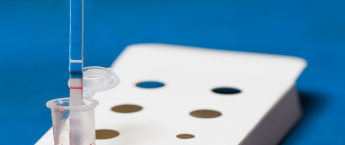
Influenza testing can be used to help diagnose the flu and determine treatment options for an individual patient, and it can be used to help rule out the flu when looking for other illnesses. A rapid influenza antigen test to detect the virus in nasal secretions is one of the most common methods to diagnose this infection. Depending on the method, it may be completed in the doctor's office in less than 30 minutes or be sent to a laboratory, with the results available the same day. Depending on the particular type of test used, it can identify the presence of an influenza virus or differentiate which influenza virus is present (A or B). The main disadvantage of the rapid influenza antigen test is that it will miss up to 30% of influenza cases and it will occasionally be positive when the patient does not actually have the flu.
Other methods to detect influenza are more sensitive and specific. Nasal secretions can be sent to a laboratory where they are stained with fluorescent antibody to visualize the presence of the virus. Influenza A can be distinguished from influenza B within several hours after the specimen is collected, and the appropriate antiviral therapy can be initiated. This method does require a special microscope and skilled laboratory personnel to read and interpret the test. It is not usually performed in a doctor’s office.
Sometimes your doctor will order a viral culture. In this test, the influenza virus is actually grown and identified in the laboratory. It has the advantage of identifying which viruses (A, B, or another respiratory virus) and which strains of virus are present. A rapid culture method, known as shell vial culture, takes only 24 hours of incubation time to be read; however, a traditional viral culture performed in a large test tube may require several days before the virus can be detected. Growing the virus in culture is useful for documenting which strains of influenza are circulating in the community. Identifying these outbreaks can assist healthcare workers in the prevention and treatment of the flu throughout a community.
How is the sample collected for testing?Sample collection technique is critical in influenza testing. The best sample is usually a nasal
aspirate, but the most frequently used samples are the nasopharyngeal (NP) swab or nasal wash. The person collecting the sample will use a syringe to push a small amount of sterile saline into your nose, then either apply gentle suction (for the aspirate) or use gravity to collect the resulting fluid (saline and mucus) into a cup. To preserve the organisms in the sample, the sample should be put in a special container, referred to as "viral transport media" or VTM, for delivery to the laboratory.
The NP swab is collected by having you tip your head back, then a Dacron swab (like a long Q-tip ) is gently inserted into one of your nostrils until resistance is met (about 1 to 2 inches in), then rotated several times and withdrawn. This is not painful, but it may tickle a bit and cause your eyes to tear. Doctors usually use NP swabs on adults but may choose to do a nasal wash or aspirate on a child. In some circumstances, a doctor may use a throat swab, but this contains less virus than an NP aspirate and so may not be appropriate for use in rapid testing.